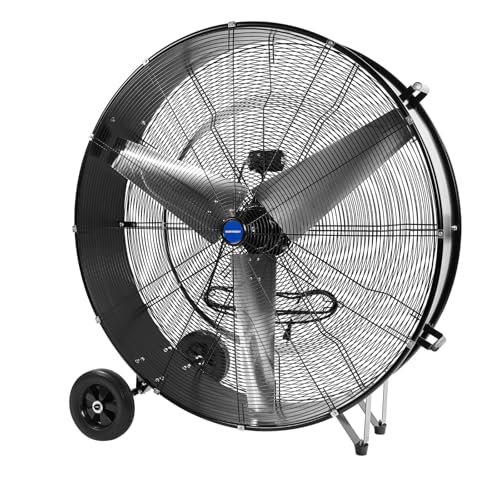
Best giant industrial fans
This tier groups the highest source-linked airflow values. Compare fan format, structural or floor-space requirements, controls, and documented location limits before selecting one.
15 fans
A practical starting point
Compare the record, not a rank
Use these entries to narrow the field by the specifications that affect your installation. Missing values remain unknown.
Buying guide
What to check before choosing a model
We group these records by source-linked airflow rather than blade size. The tiers are small under 1,500 CFM, medium 1,500–3,999, large 4,000–6,999, extra large 7,000–9,999, and giant 10,000 and up. Use the CFM calculator to explore a stated planning input, then verify the product type and installed conditions.
These ranges use ratings with linked manufacturer or product-listing evidence. Fans without a documented airflow rating remain in the full catalog.
Browse and compare
Narrow the field, then compare the details.
Search 15 fans in this collection. Select two to four models to compare their fit, controls, and source-linked specifications.
More filters
Airflow filters use source-linked ratings. Fans without a documented rating appear under “Any airflow.”
15 of 15 fans match
Select two to four fans below to compare their photos and specifications.


Ceiling fan · Progress Lighting
Progress Lighting Huff P250030-009 96-inch Ceiling Fan
- 14,482 CFM
- 96 in
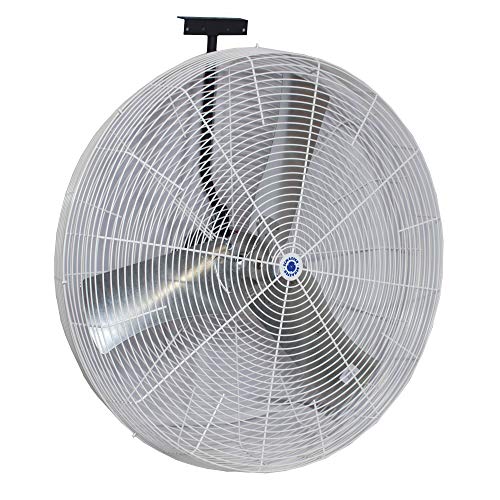
Wall-mount fan · Schaefer
Schaefer 36DF Single Phase Direct Flow Agriculture 36” Wall Mounted
- 13,140 CFM
- 36 in


Showing 12 of 15 matches
Questions people ask
- Ceiling or drum fan at this size?
- A ceiling fan needs documented structural support, blade clearance, and electrical installation. A drum fan needs floor space and a clear travel path. Compare the actual work zone and each model's published data rather than assuming one format is quieter, cheaper, or broader in coverage.
- How much power do these draw?
- Power draw varies substantially by model and speed. Use the manufacturer's published watts or amps for the intended setting, and do not estimate consumption from CFM or blade span alone.